
Garage Workshop Floor Maintenance Schedule That Actually Works
Last Updated: November 4, 2026
Quick Summary
A garage workshop floor maintenance schedule means sweeping daily, damp mopping weekly, deep cleaning twice a year and inspecting monthly, adjusted for your floor type and use intensity. Bare concrete, epoxy, polyaspartic and sealed concrete each need their own reseal or recoat window. Spills get cleaned immediately, and a monthly inspection catches small problems before they become repairs.
- Sweep daily, damp mop weekly, deep clean twice a year and inspect monthly as your baseline.
- High-traffic workshops sweep twice daily, mop twice weekly and deep clean quarterly.
- Clean epoxy with a soft broom, damp microfiber mop and neutral-pH cleaner, never harsh degreasers.
- Blot oil and grease from the outside of the spill inward so you do not spread it.
- Reapply sealer on sealed concrete when water stops beading on the surface.
Table of Contents
- Why a Garage Workshop Floor Maintenance Schedule Saves You Money
- Your Garage Floor Cleaning Schedule by Floor Type
- How to Clean an Epoxy Garage Floor Without Damaging the Coating
- The Right Epoxy Floor Cleaning Products and Tools
- Handling Oil, Grease, and Automotive Fluid Spills in a Workshop
- Your Garage Floor Maintenance Checklist for Inspections and Repairs
- Protecting Your Floor from Road Salt and Winter Chemicals
- Schedule Your Private Garage Design Consultation
- Frequently Asked Questions
Why a Garage Workshop Floor Maintenance Schedule Saves You Money
A garage workshop floor takes more abuse than any other surface in your home. Grit, oil, road salt and dropped tools all work against the coating.
At Lux Garages, we build and finish garage floors for homeowners who use their space hard. The floors that hold up best are the ones that get swept, wiped and checked on a predictable rhythm.
Here is the core idea most guides miss: you do not clean a workshop floor the way you clean a kitchen floor. Grit acts like sandpaper under a shoe. Every week you leave it there, you grind the finish down a little more.
Below, we break down a schedule by floor type, the right products, spill response, and an inspection checklist you can keep on the wall.
Your Garage Floor Cleaning Schedule by Floor Type
The right cleaning frequency depends on your floor coating and how much you use the space. If you are not sure which coating you have or what each one needs, this primer on garage floors from epoxy to concrete treatments explains the options. Concrete and epoxy need different tools and different timing, and a workshop that sees daily projects needs more attention than one used on weekends. A single generic calendar is the most common failure in workshop floor care: it either over-cleans a sealed surface with water it does not need, or under-cleans bare concrete that absorbs every drop of oil.
Use this as your baseline, then adjust for use intensity:
| Floor Type | Sweep | Damp Mop | Deep Clean | Inspect | Reseal or Recoat Window |
|---|---|---|---|---|---|
| Bare concrete | Daily | Weekly (damp, not wet) | Twice a year | Monthly | Reseal every 1-2 years if sealed; bare concrete benefits from a penetrating sealer |
| Epoxy | Daily | Weekly | Twice a year | Monthly | Recoat when topcoat dulls or wears thin, typically every 3-5 years in a home shop |
| Polyaspartic | Daily | Weekly | Twice a year | Monthly | Recoat window is longer than epoxy; inspect for chalking and edge wear |
| Sealed concrete | Daily | Weekly | Twice a year | Monthly | Reapply sealer when water stops beading |
| High-traffic workshop | Twice daily | Twice weekly | Quarterly | Monthly | Shorten reseal intervals by roughly half |
Why Bare Concrete and Coated Floors Need Different Routines
Bare concrete is porous. Oil, brake fluid, and coolant can soak in quickly, and once a stain is in the pore structure, surface cleaning may not lift it. That is why bare concrete is best cleaned with a damp mop rather than a wet wash: you want to remove surface contamination without driving liquids deeper.
Epoxy and polyaspartic are film-forming coatings. They resist absorption, but they can be affected by standing water at edges, abrasive grit ground underfoot, and harsh chemicals that dull the topcoat.
Sealed concrete sits between the two. The sealer is a thin film, so it can wear faster than epoxy in high-traffic lanes. The tell is water behavior: when a splash stops beading and starts darkening the surface, the sealer may need attention.
Adjusting the Calendar for Use Intensity
A weekend hobby shop and a daily fabrication shop should not share a schedule. Use these adjustments:
- Weekend use: sweep before each session rather than every calendar day.
- Daily use: sweep twice daily and mop more often than weekly.
- Metalworking or grinding: sweep after grinding sessions, since metal shavings can rust and stain when left damp.
- Winter road salt: rinse more often and wipe salty puddles rather than letting them dry.
Watch out: doubling the mop frequency does not fix a grit problem. If you are mopping more because the floor feels gritty, the real fix is a mat zone and more frequent sweeping, not more water.
How to Clean an Epoxy Garage Floor Without Damaging the Coating
Clean an epoxy garage floor with a soft broom, a damp microfiber mop and a neutral-pH cleaner. Skip harsh degreasers and abrasive pads. Epoxy is tough, but the wrong product can dull the topcoat.
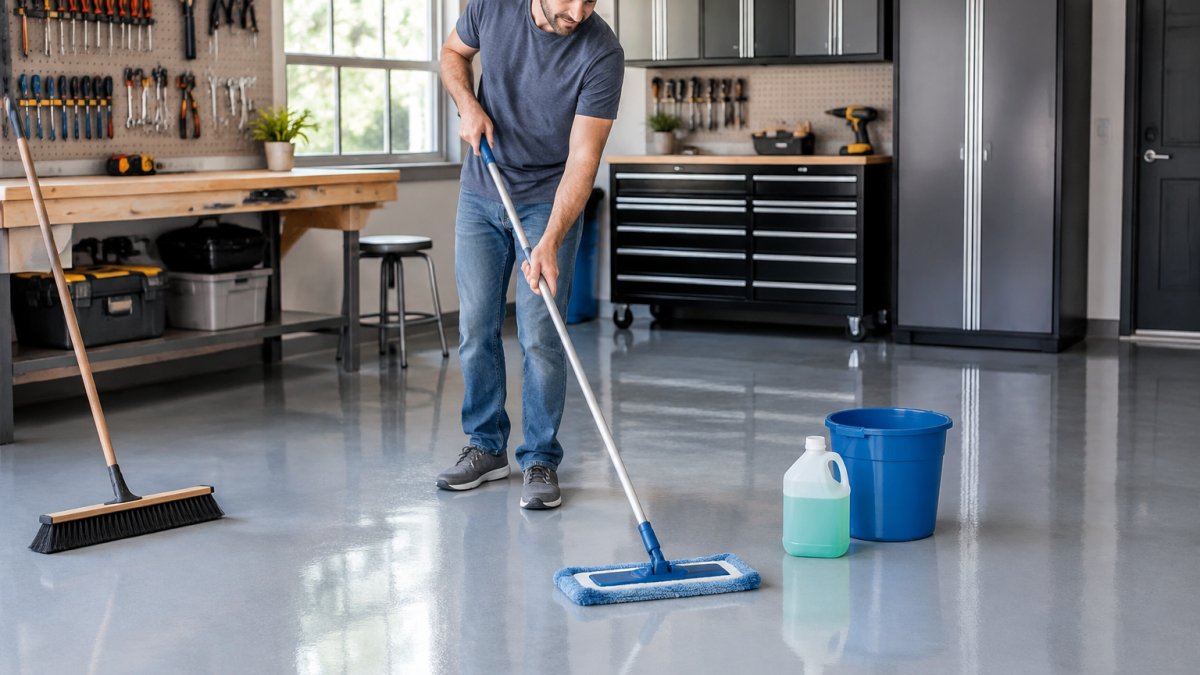
Follow these steps:
- Sweep or dust mop the whole floor to lift grit.
- Mix a neutral-pH cleaner with warm water in a bucket.
- Mop in sections with a damp microfiber pad.
- Rinse with clean water and a fresh pad.
- Dry the floor with a squeegee or fan before foot traffic.
Watch out: leaving puddles at the floor edges lets water sit against the coating. That is where peeling often starts. If your coating is due for a refresh, our team handles garage flooring from prep to final coat.
The Right Epoxy Floor Cleaning Products and Tools
The best epoxy floor cleaning products are simple and gentle. You do not need a cabinet full of chemicals. You need the right few tools and a cleaner that will not strip the finish.
Keep these on hand:
- Soft-bristle broom or dust mop
- Microfiber mop and pads
- Neutral-pH cleaner
- Squeegee
- Shop vacuum with a soft brush head
- Clean microfiber cloths for spot cleaning
Avoid steel wool, abrasive scrubbing pads and acidic cleaners, which can scratch the topcoat and leave residue that traps dirt. A common mistake is reaching for a strong degreaser on a small mark. Dilute a neutral cleaner first, and only step up if the stain resists.
Handling Oil, Grease, and Automotive Fluid Spills in a Workshop
Treat spills as urgent. Oil, grease, brake fluid and fuel can soak into concrete or soften a coating if left to sit. Clean standing liquids the moment you see them. The response differs by contaminant, so match the method to the fluid rather than reaching for the same rag every time.
Schedule Your Private Garage Design Consultation →
Step-by-Step Response by Contaminant
Motor oil and grease. Blot with an absorbent cloth or shop towel, working from the outside of the spill inward so you do not spread it.
Brake fluid. Brake fluid is glycol-based and can soften some coatings and stain concrete. Blot immediately, ventilate the area, then clean with a damp microfiber pad and neutral cleaner.
Fuel and solvents. Fuel and solvent spills are a fire and vapor concern first. Ventilate, remove ignition sources, and blot with a shop towel rated for solvent use.
Coolant. Coolant leaves a slippery residue and can stain. Blot, then clean with a damp pad and neutral cleaner. Rinse the pad rather than the floor, and dry the area before foot traffic.
Metal shavings and swarf. Sweep or vacuum with a shop vacuum, not a household vacuum, and use a soft brush head on coated floors. Do not wash shavings toward a drain; they clog and rust.
Disposal and Drain Safety
municipalities treat garage floor drains as part of the sanitary or storm system, and some fluids are prohibited from either. Absorbents soaked with oil, fuel, or brake fluid should go into a sealed container and be taken to a household hazardous waste depot, not the regular garbage. Check your local waste authority’s rules before disposal, because accepted materials and drop-off requirements vary by municipality.
Watch out: kitty litter and sawdust are common absorbents, but fine sawdust on a coated floor can scratch the topcoat if ground in. Use a dedicated absorbent or shop towels on epoxy and polyaspartic, and reserve sawdust for bare concrete.
Preventing the Next Spill
Response is the fallback, not the plan. Drip trays under vehicles and equipment, a dedicated oil-change zone with a containment mat, and closed storage for solvents reduce the number of spills you have to respond to. A spill kit kept within reach of the work zone, stocked with absorbent, shop towels, a sealed container, and gloves, makes cleanup faster.
Your Garage Floor Maintenance Checklist for Inspections and Repairs
A monthly inspection catches small problems before they become repairs. Walk the floor with a light and look for the signs below. Log what you find so you can track wear over time.
- Cracks at joints, saw cuts or edges
- Dull or thin spots in the topcoat
- Peeling or lifting at the floor edges
- Stains that will not lift with a neutral cleaner
- Loose grit or debris in corners
- Standing water after a wash
If you spot cracks, our guide to preventing epoxy garage floor cracking walks through the fix step by step. If the wear is older and widespread, read whether epoxy floor repair is worth it for old garages before you commit to a patch or a full recoat.
Protecting Your Floor from Road Salt and Winter Chemicals
Winter is often the hardest season on a workshop floor. Road salt, brine and slush get tracked in and can sit against the coating. Over time, salt and de-icing chemicals can wear down the surface.
Setting up a mat zone at the main door can help catch slush before it spreads. Rinse the floor more often in winter, and wipe up salty puddles rather than letting them dry.
Schedule Your Private Garage Design Consultation
A floor that is cleaned regularly and inspected periodically is better positioned to last than one that is neglected. The routine is simple. The payoff is a workshop floor that still looks sharp years down the road.
If your floor is showing its age, or you are planning a new build, we can help. Lux Garages provides complete garage design and build services, including professional-grade epoxy and polyaspartic flooring systems, custom cabinetry and high-efficiency lighting.
Tell us about your garage and what you would like to change. Start your project with a private design consultation, and we will follow up to discuss the next steps.
Frequently Asked Questions
How often should you clean a garage workshop floor?
Sweep or dust mop daily to remove grit that acts like sandpaper under tires and tools. Mop weekly with a neutral-pH cleaner for light residue, and do a full deep clean every season. High-traffic workshops with welding, woodworking, or fluid changes may need mopping twice a week. A written floor maintenance schedule tied to your actual shop use keeps the pace realistic and prevents coating wear from building up unnoticed.
What should you avoid using on epoxy flooring?
Skip acidic cleaners, bleach-heavy solutions, and abrasive scouring pads that dull the topcoat. Avoid solvent-heavy degreasers left to sit, and never use a pressure washer on a regular basis, since high pressure can force water under edges and lift the coating. Stick to neutral-pH cleaners, soft brushes, and microfiber mops. For stubborn spots, use a dedicated epoxy-safe degreaser and rinse promptly rather than scrubbing hard.
How do you remove oil and grease from a garage floor?
Blot fresh spills immediately with absorbent material, then apply a neutral-pH degreaser or a small amount of dish soap and warm water. Let it sit for a few minutes, agitate gently with a soft brush, and rinse clean. For older oil stains on concrete, a poultice of baking soda or kitty litter left overnight draws residue out. On epoxy, act fast because oil can seep into seams and edges if left standing.
How often should an epoxy garage floor be resealed or recoated?
A clear topcoat may need refreshing once wear shows in high-traffic zones. Inspect annually for dulling, chips, or peeling and address small repairs promptly. Proper cleaning with neutral-pH products and prompt spill cleanup extends coating life significantly. If you notice widespread lifting or cracking, a professional assessment is the right next step rather than a DIY patch.
Your workshop floor does not have to be a maintenance headache. Get started with Lux Garages and build a garage that protects your vehicles, your tools and your investment.
